Service-oriented Open Platform for Citizen Energy Communities. A collaborative platform
(OPEN4CEC)
Contract no. 47/2024
Project founded by UEFISCDI within PNCDI IV, total funding: 255.000 euro (budget 250.000 euro, self-funding 5.000 euro)
Coordinator: Academia de Studii Economice din Bucuresti (ASE), prof. Simona Oprea
Romanian Partner: Lara Business SRL, Dan Florea
Project progress
2024 – SCIENTIFIC REPORT ON THE DESIGN OF REFERENCE ARCHITECTURE
SUMMARY
Act 1.1 – Proposing and modeling the MRA architecture
• Identifying and analyzing regulatory and legislative requirements – LARA partner
• Specifying the functional requirements of the MRA architecture. Proposing levels and modeling MRA components – ASE coordinator
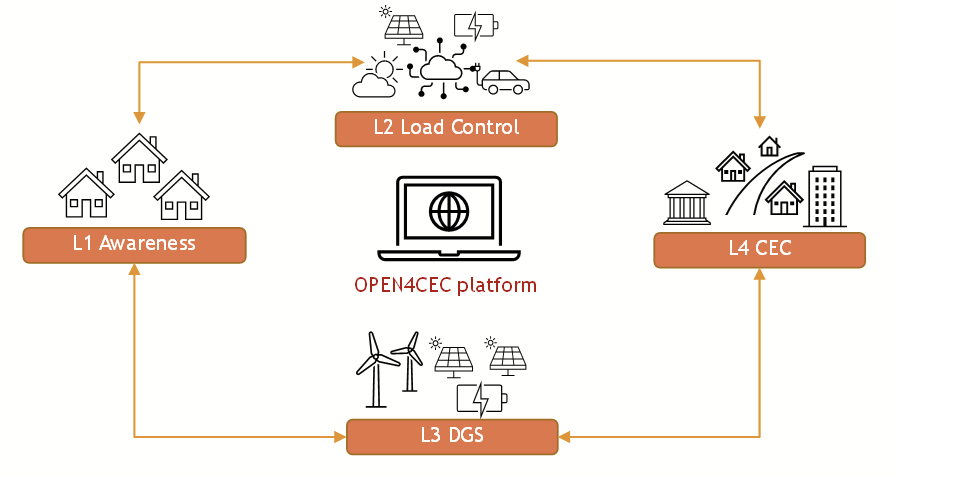
Activity A1.1 focused on analyzing and defining the MRA architecture (Microservices Reference Architecture), identifying the regulatory and legislative requirements relevant for the development of a digital platform dedicated to citizen energy communities (CEC). In this regard, a comparative analysis of the strategies applied in different European countries, such as Denmark, Germany, the United Kingdom and Romania, was carried out to understand the challenges and legislative solutions in support of CEC. The need to modernize electricity networks and adopt ICT solutions for the integration of prosumers and the management of energy flows was highlighted. Business models, consumer behaviors and the necessary incentives to encourage the transition to CEC were also addressed. The results provided a solid basis for the development of a multi-level platform capable of responding to both the technical and social and economic requirements of the CEC.
Act 1.2 – Proposing microservices for the L1 level – Awareness, Acceptance & Adoption
• Identification and analysis of requirements for the development of microservices for the L1 level – LARA partner
• Modeling microservices for the L1 level – ASE coordinator
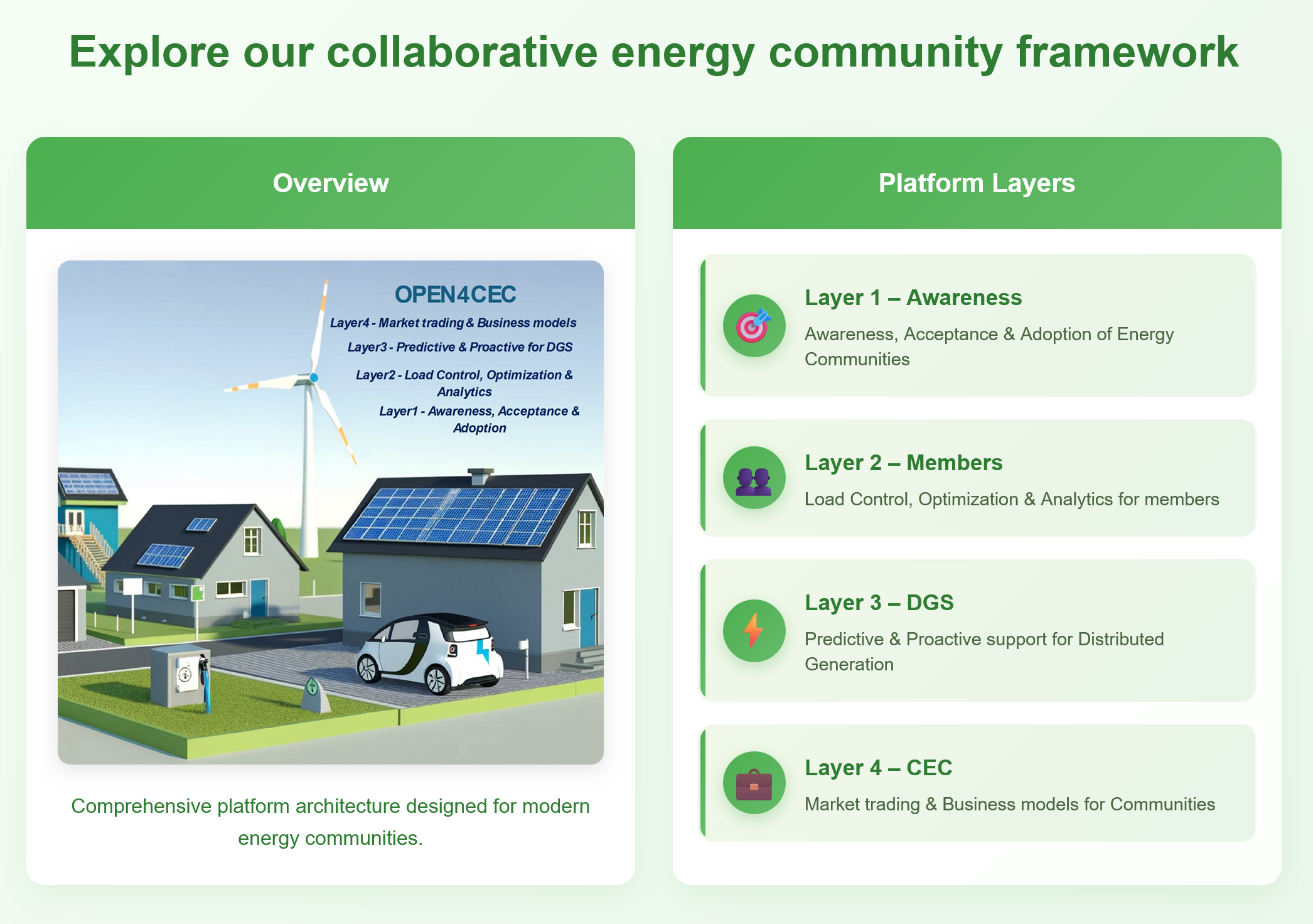
Activity A1.2 focused on the design and modeling of microservices specific to the L1 level of the proposed architecture, aiming to increase awareness, acceptance and adoption of the CEC by consumers. The developed microservices include tools for simulating consumer behaviors, the use of gamification to motivate active participation and the implementation of incentives such as Demand Side Management (DSM) and Demand Response (DR). Within this activity, models were also proposed for the assessment of the residential photovoltaic potential in Romania and transition scenarios for communities, from the use of renewable energy to the integration of electric heating and electric mobility. The OPEN4CEC platform, developed as a result of these activities, integrates these microservices into a scalable, adaptable and secure framework, capable of supporting both individual users and energy communities in their transition towards sustainability.
Act 1.3 – Dissemination of results
The results of the 2024 stage were disseminated in 5 WoS indexed articles and 2 articles published at international conferences.
| Journal papers published in 2024 |
| Simona-Vasilica Oprea, Adela Bâra, Charting the course: America’s energy crossroads and the quest for a sustainable future, American Journal of Economics and Sociology, May 2024, doi: 10.1111/ajes.12576 |
| Delcea, C., Oprea, S.-V., Dima, A. M., Domenteanu, A., Bara, A., & Cotfas, L.-A., Energy communities: Insights from scientific publications. Oeconomia Copernicana,2024, 15(3), 1101–1155. https://doi.org/10.24136/oc.3137 |
| Simona-Vasilica Oprea, Adela Bâra, A Conceptual Meta-Level Digital Twin Architecture for Energy Communities in Romania and Other Ex-Communist Countries, 2025, Environmental Progress & Sustainable Energy, https://doi.org/10.1002/ep.14559 |
| Adela Bâra, Simona-Vasilica Oprea, Corina Murafa, Energy communities’ archetypes and operational scenarios using agents and embedding heating and transportation sectors, 2025, Environmental Modeling & Assessment, https://link.springer.com/article/10.1007/s10666-025-10049-7 |
| Văduva, Alin-Gabriel, Simona-Vasilica Oprea, Andreea-Mihaela Niculae, Adela Bâra, and Anca-Ioana Andreescu, Improving Churn Detection in the Banking Sector: A Machine Learning Approach with Probability Calibration Techniques, Electronics 13, no. 22: 4527, 2024, https://doi.org/10.3390/electronics13224527 |
| International conferences in 2024 |
| Cristina Iancu, Simona Vasilica Oprea, Cristian-Eugen Ciurea, Technological Integration in Higher Education, The 23rd International Conference on Informatics in Economy (IE 2024), Education, Research & Business Technologies, 23-24 May 2024, Timișoara, România |
| Alexandra-Cristina-Daniela Ciuverca, Price Prediction Models for Construction Sector – Efficiency and Interpretability, The 1st edition of the International Conference on Economics – Challenges and Opportunities, October 10-12, 2024, Predeal, Romania |
2025 – SCIENTIFIC REPORT ON THE DESIGN OF REFERENCE ARCHITECTURE
SUMMARY
Stage 2025 involved the following activities:
A1. Development of the reference architecture (MRA)
- A1.1. Development of API components
- A1.2. Development of the microservices integration layer (API Gateway)
A2. Development of microservices for levels L1 and L2
- A2.1. Development of microservices of level L1
- A2.2. Specification of the implementation requirements of microservices of level L2 – individual management at the level of CEC members
- A2.3. Development of microservices of level L2
A3. Modeling of microservices of levels L3 and L4
- A3.1. Proposal and modeling of microservices L3 – distributed generation and storage (LARA)
- A3.2. Proposal and modeling of microservices L4 – energy communities (CEC) (ASE)
A4. Dissemination of results
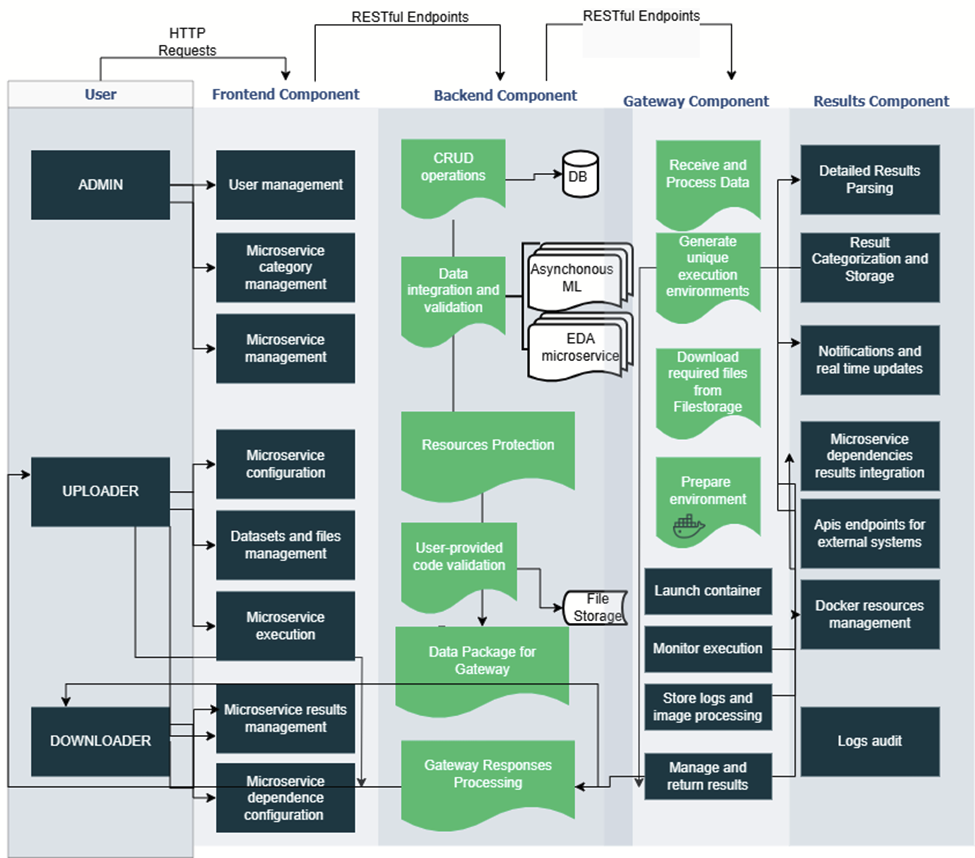
The 2025 stage of the OPEN4CEC project aimed at developing and consolidating the reference architecture for the service-oriented collaborative platform for energy communities (CEC). The activities aimed at the creation of API components, integration via API Gateway and the implementation of microservices for the L1 and L2 functional levels of the MRA modular architecture. The OPEN4CEC platform is designed as a scalable, secure and flexible ecosystem, allowing the loading, running and monitoring of microservices in isolated Docker containers. Robust mechanisms for authentication, categorization and execution tracking were implemented, as well as complete functional flows for the management of microservices and their results.
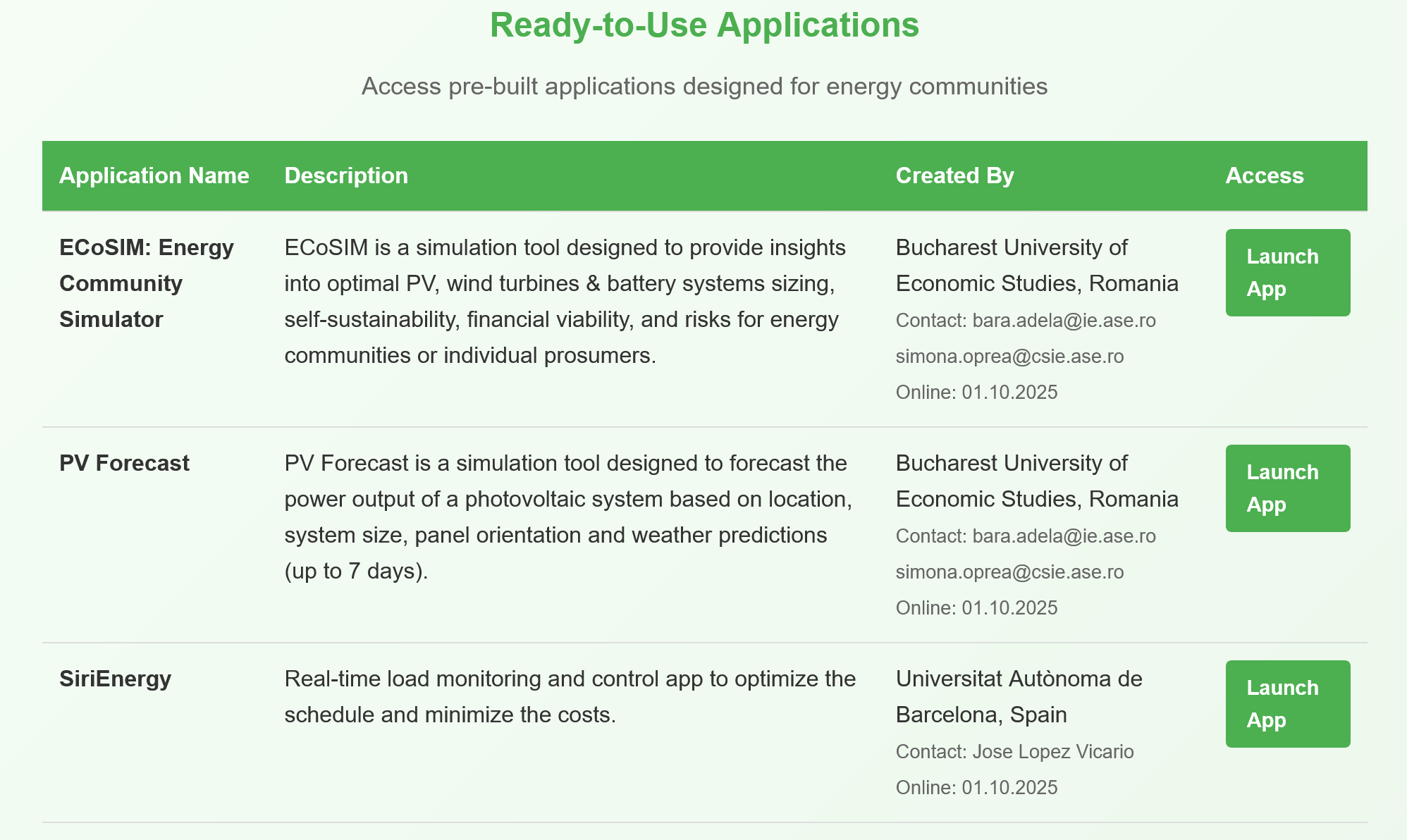
For the L1 level, advanced microservices were developed, of which PV Forecast stands out for its ability to perform short-term photovoltaic forecasts by integrating meteorological data from multiple sources and using deterministic models of photovoltaic systems. Microservices dedicated to smart monitoring and control were also implemented, such as SiriEnergy and a solution for smart buildings. For the L2 level, requirements were defined and subsequently microservices were created that manage the optimization of consumption at the community level and the real-time monitoring of energy parameters.
At the same time, the modeling of microservices for the higher levels L3 and L4, dedicated to distributed generation and storage, resource planning, revenue-stacking and trading strategies at the CEC level, was approached. These use ML algorithms, advanced control functionalities and decision logics necessary for the sustainable and efficient operation of energy communities.
The results of the 2025 stage were disseminated in 11 WoS indexed articles and 3 articles published at international conferences.
| Journal papers published in 2025 |
| Oprea, S.-V., & Bâra, A. (2025), Economics of utility-scale batteries in Romania under various market conditions, Utilities Policy, Volume 95, 2025, 101939, ISSN 0957-1787, https://doi.org/10.1016/j.jup.2025.101939. (https://www.sciencedirect.com/science/article/pii/S0957178725000542) |
| S.V. Oprea, A. Bâra, I.A. Georgescu, Exploring the relationship between CO2 emissions, economic growth, urbanization, renewables and foreign investment in Iceland, Energy Strategy Reviews, Volume 61, September 2025, 101835, 10.1016/j.esr.2025.101835. |
| S. -V. Oprea and A. Bâra, Graph-Based User-Centric Recommender System Using Neo4j, Cypher, and Jaccard Similarity in the Field of e-Commerce, in IEEE Access, vol. 13, pp. 135089-135097, 2025, doi: 10.1109/ACCESS.2025.3591705. |
| S. -V. Oprea and A. Bâra, Smart Grids, Super Smart Grids, and Microgrids: A Triple Challenge for the Future of Energy Landscape, in IEEE Access, vol. 13, pp. 162422-162435, 2025, doi: 10.1109/ACCESS.2025.3609793 |
| Dobriţa, G., Oprea, S. V., & Bâra, A. (2025). An NLP-driven e-learning platform with LLMs and graph databases for personalised guidance. Connection Science, 37(1). https://doi.org/10.1080/09540091.2025.2518991 |
| Stănescu G, Oprea S-V. Recent Trends and Insights in Semantic Web and Ontology-Driven Knowledge Representation Across Disciplines Using Topic Modeling. Electronics. 2025; 14(7):1313. https://doi.org/10.3390/electronics14071313 |
| Bâra, A., Oprea, SV. & Murafa, C. Energy Communities’ Archetypes and Operational Scenarios Using Agents and Embedding Heating and Transportation. Environ Model Assess (2025). https://doi.org/10.1007/s10666-025-10049-7 |
| Bâra, A., Georgescu, I.A. & Oprea, SV. Assessing Asymmetries Among Economic Growth, Trade, Resources, and Ecological Footprint in the Caspian Region. Environ Model Assess (2025). https://doi.org/10.1007/s10666-025-10068-4 |
| Oprea, SV., Bâra, A. Interpreting text corpora from androids-related stories using large language models: “Machines like me” by Ian McEwan in generative AI. Humanit Soc Sci Commun 12, 325 (2025). https://doi.org/10.1057/s41599-025-04633-1 |
| Bâra, A., Georgescu, I. A., & Oprea, S.-V. (2025). Does Education Make a Difference in Combating Climate Change? Analyzing Its Impact on CO2 Emissions in the South-East European, Nordic, and Baltic Regions. Sustainability, 17(11), 4789. https://doi.org/10.3390/su17114789 |
| S. -V. Oprea and A. Bâra, Transforming Education With Large Language Models: Trends, Themes, and Untapped Potential, in IEEE Access, vol. 13, pp. 87292-87312, 2025, doi: 10.1109/ACCESS.2025.3570649 |
| International conferences in 2025 |
| Adela Bâra, Simona Vasilica Oprea ECoSIM: Decision support system for energy communities, The 11th International Scientific Conference (SEA-CONF 2025), May 15-17, 2025, Constanta, Romania doi: 10.21279/1454-864X-25-I1-016, Scientific Bulletin of Naval Academy, Vol. XXVIII 2025, pg. 174-183, MBNA Publishing House Constanta 2025, ISSN: 2392-8956; ISSN-L: 1454-864X |
| Mitroescu Dragoş, Simona Vasilica Oprea, Adela Bâra, A Web-Based Facial Recognition Application Using Convolutional Neural Networks (CNNs), Conferința Internațională „Global Economy Under Crisis” (GEUC) – ediția a XIV-a, 11 – 12 decembrie 2025, Constanta, Romania, Analele Universităţii Ovidius. Seria: Ştiinţe Economice – Vol. XXV, Nr. 2/2025, ISSN 2393-3119, Ovidius University Press, Romania, https://stec.univ-ovidius.ro/the-international-conference-global-economy-under-crisis-14th-edition-december-11th-12th-2025/ |
| Alexandra Ciuvercă, Cristina Iancu and Simona-Vasilica Oprea, Key Determinants of the Romanian Labour Market: Adaptation in an Era of Technological and Demographic Change, The 24th International Conference on Informatics in Economy (IE 2025), May 15-16, 2025, Bucharest, Romania, published in Proceedings of the International Conference on Economics and Social Sciences, Editura ASE, ISSN: 2704-6524 |
Contact
prof. Simona Oprea: simona.oprea@csie.ase.ro
prof. Adela Bara: bara.adela@ie.ase.ro